NBFTids
Du er her: BF 2005 nr 6 - Innhold

Who goes to IFLA? The social selection of IFLA participants
Middle-aged managers
Two years ago I attended the IFLA conference in Berlin. That was my second encounter with IFLA, after Beijing (1995). And I started to wonder: who attend these conferences? The people that filled the conference lobby looked more like an opera audience than the people you see at rock concerts. Most of them were, like myself, on the grey side of fifty.

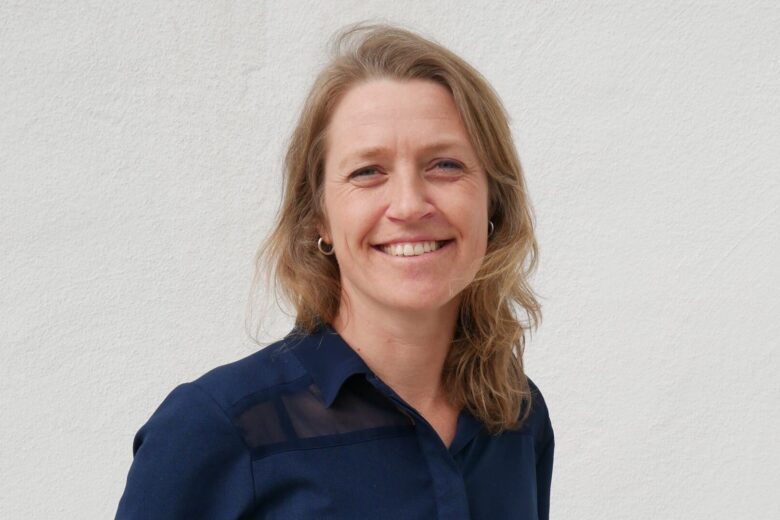
By Tord Høivik, Associate professor, Oslo University College

Seniority leads to respectability. I had the impression that many participants represented higher levels of management. They spoke like cultural planners and managers. How many were librarians in direct contact with the public? I saw a few young faces in Berlin, but most of these youngsters turned out to be local volunteers. So I did a small study based on the list of participants.

The chosen few
The annual conference of IFLA is the central meeting place for the profession. Every year, several thousand library people attend. The venue moves from country to country, and from continent to continent: last year Buenos Aires, this year Oslo, next year Seoul.
IFLA is a complex organisation and the conference is a complex event. Hundreds of parallel processes interact - before, during and after each annual meeting. There is no single focus and no central story. But IFLA is the only global forum we have. IFLA speaks for the librarians of the world and represents us in the international community. The selection of IFLA participants and the decision processes within the organisation are therefore of great interest.
In statistics we speak about random samples. If you take a random sample from a population, every person will have the same chance of being selected. The participants at IFLA can also be treated as a sample: a few thousand people that represent the world wide community of libraries and information services.
The size of this community is not well known, but rough estimates point to a number between 500 thousand and one million. Here I will call them librarians, whether they have formal degrees or not. Both accredited librarians and paraprofessionals are parts of the whole. At a guess, there is about one librarian for every ten thousand people in the world. In Europe, the rate is much higher. If we look at the public sector only, there are almost three in Southern Europe, almost seven in Northern Europe and as much as eleven per ten thousand in the Baltic states!

Democracy and bureaucracy
Let me state my basic point at once: IFLA has many strong and many weak sides. I admire the professionalism, the internationalism and the hard work that goes into running the organisation. Ideals are important - and IFLA is a strong defender of democracy, equality, education and human rights. On the weak side I note a strong tendency to bureaucracy, a certain resistance to new people and ideas, and a great waste of energy on vast annual meetings. An annual schedule is rare in the world of professions,. Our sister organisations in the cultural field meet every second, every third or even every fourth year. These weaknesses exclude most practising public librarians.

Public libraries at IFLA
How well are the public libraries of the world represented at IFLA. Librarianship is a single profession. But libraries are divided. When people in general speak about libraries, they imagine the library "everybody" knows: the public library that serves a local community. The other half of the library world is less visible. It consists of all the academic and special libraries that serve limited groups of students, teachers, researchers and staff.
In Berlin it was hard to see whether delegates came from the public or the institutional sector. But from the titles of the delegates it is possible to gather information on the distribution between sectors. Roughly one fifth of the participants came from public libraries. Two thirds represented institutional and national libraries. One eighth came from library associations and government bodies. This means, of course, that the public library sector is poorly represented. My tentative conclusion is: public librarians participate only half as frequently as - say - their academic counterparts.
In smaller libraries the staff is close to the users. Participants coming from large public libraries tend to be managers of other librarians. At IFLA, very few participants represent small or medium-sized public libraries. France sent twenty people from the public library sector. Only two towns with less than 100 thousand inhabitants were represented: Fresnes (25,000) and Hyère (53,000). Great Britain had one from Barnsley (83,000). The United States sent twenty-seven public librarians. Two came from small or medium-sized public libraries: Clymer (11,000) and South Brunswick (33,000).
China is an industrializing country rather than a fully industrialized country and cannot be compared directly with France, Great Britain and the United States. I was unable to gather population figures in the Chinese case. But I note that China did send a substantial group from the public library sector: 46 delegates altogether, mainly from bigger cities. The dynamic areas on the south coast, with great manufacturing cities like Shanghai and Shezhen, were well represented.

Voices from the grass
My personal impressions were confirmed. Public libraries are poorly represented at IFLA - and librarians at the grassroots level, in direct contact with their users, are rare birds indeed. This is hardly ideal. The lack of "voices from the grass" is easy to explain. IFLA participation is expensive. A single trip will easily cost 2.500 Euro - which is a formidable sum for public libraries in the South and for smaller public libraries in the North. A single trip has little impact. To be heard inside the organization, people must return time after time, year after year.
The decision-making bodies of IFLA are - naturally enough - mainly recruited from big organisations with regular travel budgets. The exclusion of small, local libraries is nobody`s decision or fault: it follows logically from the structure and operating practices of the organisation. The consequence is unintended, but none the less real.
Can this be changed? Definitely - by removing the barriers to participation. ICT allows new forms of organisation. I speak from my experience with the Norwegian Special Interest Group for Public Library Policy and other networks. We publish "everything" on the Internet, communicate through the web, have zero membership fees, and meet physically as seldom as possible.
Similar web-centred organisations exist in the international community. IFLA is a child of the printing age. It seems to be lumbering into the digital age - while other groups move trippingly on their feet.  I - and many others - would welcome a faster pace and a lighter step into the future.